Grazing country, plain and simple
Walcha is about as close to a pure grazing district as NSW gets. At the 2021 Census, specialised beef cattle farming was the largest employing industry in the Walcha council area with 274 people, nearly one job in five. Sheep-beef cattle farming came second with 109 and specialised sheep farming third with 83 (ABS QuickStats, Walcha). The shire had 3,016 people and a median weekly household income of $1,224.
So fencing here is serious farm infrastructure. Boundaries are long, paddocks are big, and many producers run sheep as well as cattle, which means fences that hold both and keep dogs out.
High and cold
Walcha sits on the New England tablelands. Northern Tablelands Local Land Services describes its region as a highland with an average elevation over 1,000 m, cold winters, frosty mornings and occasional snow, with beef, sheep and wool as the main industries (Local Land Services regional profile). That makes winter fencing slow, with short days and cold, sometimes wet ground, and it puts timber posts in damp soil for long stretches. Ask the contractor when they plan to build and what timber class or treatment they quote.
| Job | What usually changes on the tablelands |
|---|---|
| Sheep and cattle boundaries | Netting with plain or barbed wire above, built to hold both |
| Wild dog exclusion | Taller netting, aprons and electric outriggers |
| Escarpment and timbered country | Rock, slope and access, often worked by hand |
| Winter work | Short days, frost and wet ground slow everything |
The dog fence near Walcha
Wild dogs are the reason many Walcha fences are built the way they are. Australian Wool Innovation, an industry body, reported on a 44 km predator-proof exclusion fence built through Walcha Council in the Moona Plains and Winterbourne area, joined with existing boundary fences into a network of about 111 km. It said the network protects around 110,000 hectares and about 150 landholders from wild dogs (industry body, secondary source).
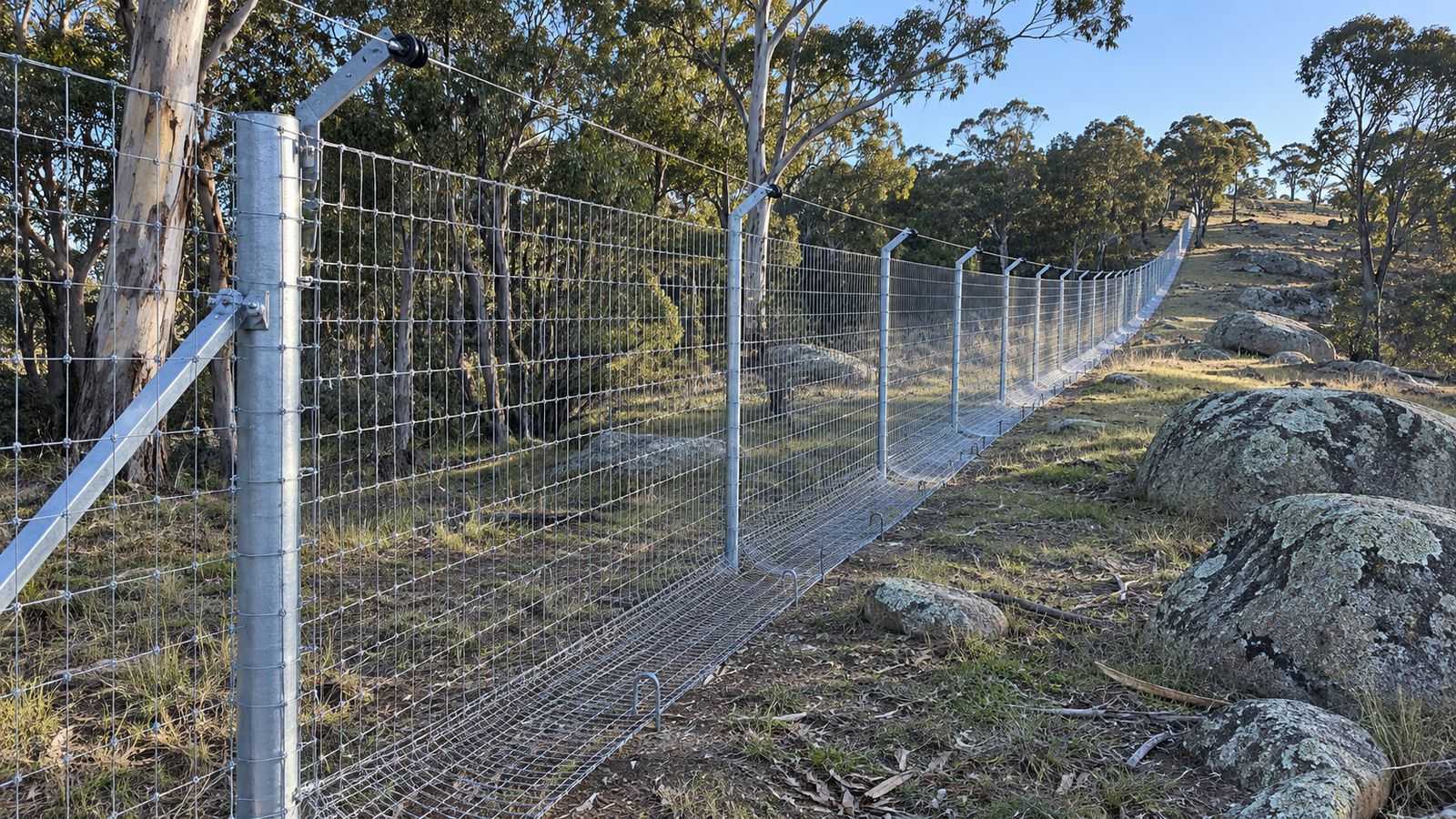
The lesson from that project is that the fences that work best against dogs are built by neighbours together, joined to each other, with gaps at creeks and gates closed off. A single property fence leaves the dogs next door with a way round. Local Land Services also runs aerial and ground baiting for wild dogs and foxes across the Northern Tablelands and North West (Local Land Services baiting notice), and fencing works alongside that, not instead of it.
Before building a dog fence
Ring the Local Land Services biosecurity officer and the local wild dog association first. They will know whether a group fence runs near you, where the gaps are and whether your fence would link to it. Then talk to the contractor about height, the apron, hot wires, and how every creek and gate will be closed. Tall fences can exceed the 1.8 m limit for exempt rural fences, so check with Walcha Council too. The wild dog fencing guide and the approvals guide explain more.
Getting it quoted
Walcha is about an hour and a half from Tamworth, and there are fencers based on the tablelands too. Send the locality, the stock, whether dogs are a problem, a rough length and a photo through the quote form. For the fence itself, see cattle and sheep fencing.
What this page cannot tell you
It cannot tell you whether a group dog fence runs near your property, whether your fence would connect to it, or whether any funding is open now. The exclusion fence figures come from an industry body's report, not a government audit. The census figures are for the whole Walcha council area. Ask Local Land Services and the wild dog association about dogs, Walcha Council about approvals, and a contractor who builds dog fences about the fence.
Check the current rules before you rely on this
This page describes the grazing country around Walcha, what Local Land Services says about the tablelands, and a reported group wild dog exclusion fence in the district. It describes the rules in general terms as they stood in November 2026. Standards, forms, thresholds and fines change.
The authoritative sources are ABS 2021 Census QuickStats: Walcha (local government area), Local Land Services, Northern Tablelands regional profile, Australian Wool Innovation, exclusion fencing in northern NSW (industry body, secondary source), Local Land Services, 1080 aerial and ground baiting program for wild dog and fox control (2026 notice) and NSW Planning, fences (exempt and complying development). Where anything here differs from those sources, they are right and we are not.
We are not fencing contractors, builders, regulators or lawyers. For what applies to your land, ask the Local Land Services biosecurity officer and the local wild dog association, Walcha Council about planning, and the contractor how the fence will be built.
Accurate at the time of writing, November 2026. Always check the source before relying on it.