Coal town, farm country
Rural fencing around Gunnedah is cropping and cattle work on some of the most productive black soil in the state, with the Namoi running through the middle of it. The town's jobs tell a different story from its paddocks: at the 2021 Census, coal mining was the largest employing industry in the Gunnedah council area with 751 people, and specialised beef cattle farming was fifth with 159 (ABS QuickStats, Gunnedah). The shire had 12,929 people and a median weekly household income of $1,557.
That mix matters for fencing in a practical way. Mine-owned land, offset areas and buffer properties sit among working farms, and a boundary fence can have a corporate landholder on the other side. Get the right contact for the neighbour early.
What gets fenced here
| Country | Usual fencing work | What to raise with the contractor |
|---|---|---|
| Black soil cropping plains | Long straight boundary and laneway fences, machinery gates | How strainers are set in heavy clay, and timing around sowing and harvest |
| Grazing country and hills | Cattle fencing, plain and barbed wire | Rock on the higher ground, and access for the post driver |
| Namoi and creek flats | Fences that go under when the river rises | Separate crossing sections, plain or electric wire on the lowest ground |
| Blocks near town | Horse paddocks and small acreage | Rails, mesh and tape. See the horse fencing page |
The table is a general guide to help you describe your job. Tell the contractor what your own ground is actually like.
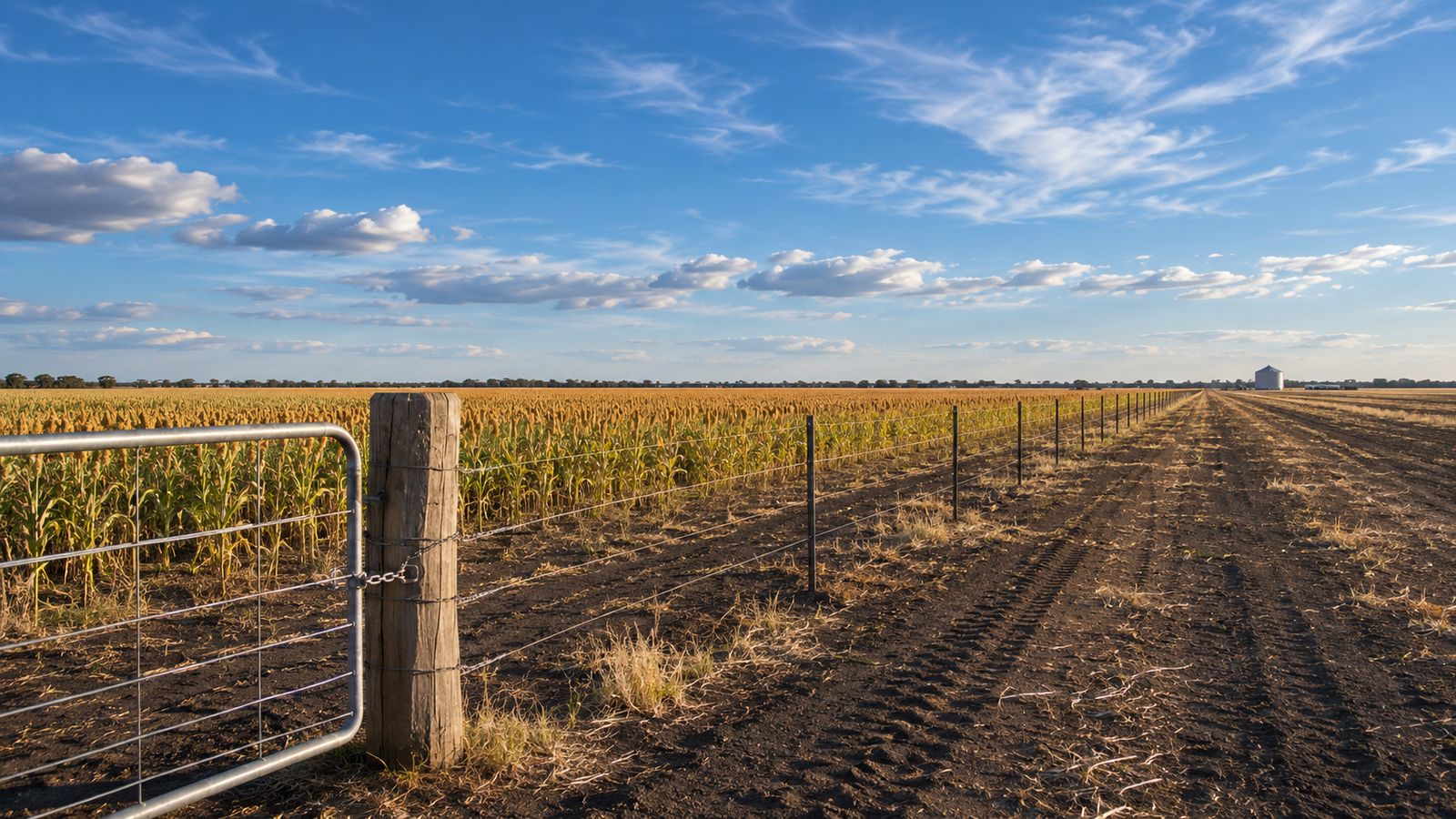
Black soil
Gunnedah's black soil is good for crops and testing for fences. When moist it drives easily. After a long dry spell it can set hard enough to slow a post driver to a crawl, and heavy clay that wets and dries asks a lot of a strainer footing. Contractors who work these plains have their own methods. Ask how deep they set strainers, what footing they use, and whether they would rather wait for rain on your job.
Cropping also sets the calendar. A fence through a paddock that is about to be sown, or is standing in crop, has to wait. Plan boundary and laneway work around the seasons so the contractor is not held up at the gate.
The Namoi floods
Gunnedah Shire Council records major flooding in early December 2021 that was declared a natural disaster, affecting residents, businesses and primary producers and damaging bridges, roads and causeways around the shire (Gunnedah Shire Council). Fences on river and creek flats take the same water.
Victorian Government guidance for riparian fences in flood-prone areas, an interstate source, recommends plain wire instead of netting where water crosses, fences that run with the flow, and independent strainers either side of each crossing so a flood takes one section and not the whole run (Victorian riparian fencing guidance). Flood and fire fence repair has the detail.
Neighbours, mines and stock routes
Boundaries here can run beside another farm, a mining company's land, a travelling stock reserve or a public road. The usual rule is that neighbours share a sufficient dividing fence equally, but a public authority on the other side may not be bound to contribute. See farm boundary fencing and roads, stock routes and Crown land.
Getting a fencer to Gunnedah
Contractors come from Gunnedah itself and from Tamworth, about an hour away. Long runs are easier to place than short repairs out past Mullaley or Boggabri, so if you have several jobs, describe them all at once. Send the details through the quote form, and read the cost guide to compare quotes properly.
What this page cannot tell you
It cannot tell you how your soil will behave under a strainer, whether your paddock will flood this year, or what a contractor will charge to reach you. The census figures are for the whole Gunnedah council area. The flood information is the council's own summary of one event. For flood levels on your land, ask the council. For the fence, ask a contractor who works the Namoi.
Check the current rules before you rely on this
This page describes the cropping, grazing and river country around Gunnedah and what affects rural fencing jobs there. It describes the rules in general terms as they stood in November 2026. Standards, forms, thresholds and fines change.
The authoritative sources are ABS 2021 Census QuickStats: Gunnedah (local government area), Gunnedah Shire Council, flooding events page, Victorian Government, guidelines for riparian fencing in flood-prone areas (2015; Victorian guidance, interstate) and Dividing Fences Act 1991 (NSW), in-force version dated 7 December 2024 (check the current version). Where anything here differs from those sources, they are right and we are not.
We are not fencing contractors, builders, regulators or lawyers. For what applies to your fence, ask the contractor which licence or registration they hold for your job, then ask NSW Fair Trading or Building Commission NSW if you are unsure, and ask the council that covers the land.
Accurate at the time of writing, November 2026. Always check the source before relying on it.