A horse town's fences
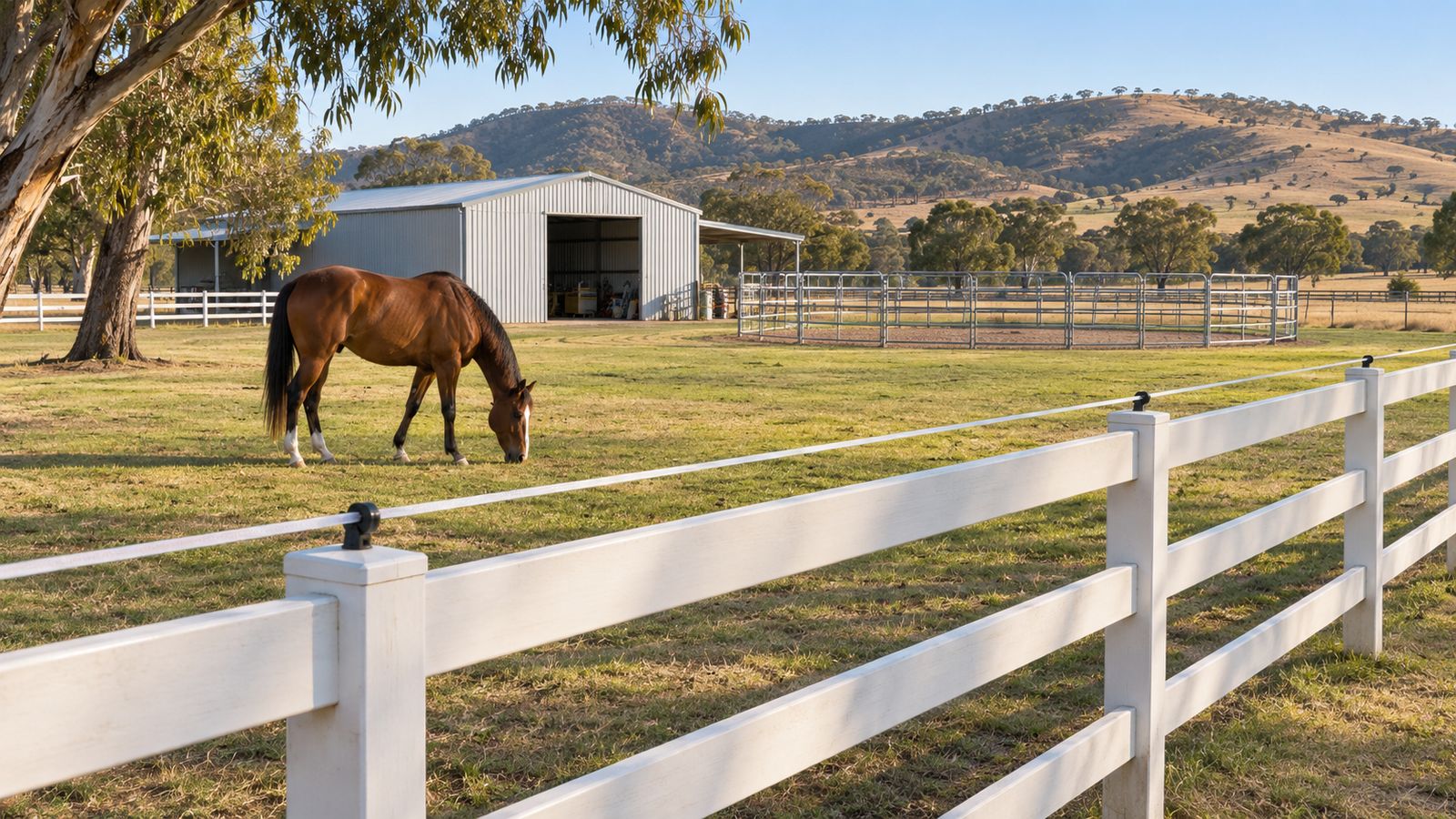
Tamworth has a large horse community, and the blocks around it are full of horse paddocks, round yards and day yards. Fencing them is different work from fencing a cattle paddock. The runs are shorter, there are more corners and gates, the fence is in full view of the house, and the animal inside is valuable and good at hurting itself on the wrong wire.
Most of these enquiries come from the small acreage around the city: Kootingal, Moonbi, Calala, Nemingha, Hallsville and the roads out towards Bendemeer. Many of those blocks were cut from grazing land, so the first question is often whether the old barbed wire boundary that came with the place can stay.
Common options
We found no public standard for horse fencing, so this page does not rank fence types. Here is what contractors commonly build and what owners weigh up.
| Fence | Why owners choose it | Watch for |
|---|---|---|
| Timber post and rail | Easy for a horse to see, solid, looks the part | Highest cost and upkeep. Rails get chewed without a hot wire on top. |
| Rail with horse mesh below | Keeps foals and dogs in too | Mesh must be small enough that a hoof cannot go through. |
| Plain wire with a top rail or sighter | Lower cost on long runs | Bare wire is hard to see, so a rail, cap or wide tape is added. |
| Electric tape or braid | Fast to put up, easy to change | Needs power and checking. Usually inside a permanent boundary. |
Most horse owners avoid barbed wire and standard stock netting, because a horse that gets a leg through either tends to come off worse. If the boundary is old barbed wire, a contractor can often pull the barbs and run a hot tape on offsets as a lower-cost first step.
Heat, dry clay and posts
Summers are hot here, with a January mean maximum above 33 degrees at the Bureau of Meteorology's Tamworth Airport station (Bureau of Meteorology). Timber rails move and split in heat, and treated pine checks as it dries. In the clay soils common around town, posts can be hard to set in a dry spell. Ask what timber is quoted, its durability class or treatment level, and how rails are fixed. A timber industry body says treated softwood posts in the ground should be specified to H4 (timber industry guidance).
Shade, water and layout
In this climate a paddock layout has to allow for shade and water as much as for the fence. Sketch where the trees, troughs, shelters and yards are before the contractor visits, then place gates so you are not leading horses the long way round in the heat. Gateways wide enough for a float, a hay truck and a fire tanker cost far less to build in than to widen later.
Council and neighbours
NSW planning guidance says fences in rural and large lot residential zones are often exempt development if they are post and wire or post and rail and stay under 1.8 m, with exceptions such as heritage items (NSW Planning). Solid, masonry or taller fences are another matter. Check with Tamworth Regional Council if you are unsure. See the approvals guide.
On a shared boundary, the usual rule is that neighbours split a sufficient fence and the owner who wants rails instead of wire pays the difference. Farm boundary fencing sets out how to agree it.
Get it quoted
Send the address area, the animals, a sketch and a few photos through the quote form. Say if you also want a round yard, arena fence or day yards, so it goes to someone who builds them. Electric fencing explains the tape and energiser side.
What this page cannot promise
No fence makes a horse safe. Horses run into, lean on and jump every kind of fence, and this page cannot tell you which design suits your horses or your block. It sets out no standard because we did not find one, and the table is a summary of common practice, not advice. A contractor who builds for horse people, and your vet, are better guides than any website.
Check the current rules before you rely on this
This page describes the fence types commonly built for horses and small acreage around Tamworth and what public sources say about approvals and timber posts. It describes the rules in general terms as they stood in November 2026. Standards, forms, thresholds and fines change.
The authoritative sources are NSW Planning, fences (exempt and complying development), Australian timber industry education body, fencing (durability classes and treatment), Bureau of Meteorology, Tamworth Airport AWS climate statistics (station 055325) and Dividing Fences Act 1991 (NSW), in-force version dated 7 December 2024 (check the current version). Where anything here differs from those sources, they are right and we are not.
We are not fencing contractors, builders, regulators or lawyers. For what applies to your fence, ask the contractor which licence or registration they hold for your job, then ask NSW Fair Trading or Building Commission NSW if you are unsure, and ask the council that covers the land.
Accurate at the time of writing, November 2026. Always check the source before relying on it.