Four jobs for an electric fence
Electric fencing does its work by training stock to stay off the wire, which is why it can be so much lighter than a conventional fence. Around Tamworth it is mostly used for four things: an offset wire to stop cattle leaning on an old fence, low-cost subdivision for rotational or cell grazing, light fencing across flood flats, and outriggers on dog and pig fences.
That last one is where it matters most in the hill country. Northern Tablelands and North West Local Land Services run a joint wild dog and fox baiting program across a wide area that reaches south to Quirindi (Local Land Services baiting notice). Where netting alone is not keeping dogs out, contractors add hot wires low on the outside and at the top. The wild dog fencing guide covers the wider picture.
The pieces and the questions
| Piece | Job | Ask |
|---|---|---|
| Energiser | Puts pulses on the wire. Mains near the house, solar and battery out the back. | How it was sized for the length and the grass that will touch it |
| Earth | Completes the circuit through the ground. Weak earth means a weak fence. | How many stakes, where, and how it copes when the ground is bone dry |
| Wire, tape or braid | Plain high tensile for permanent lines, poly products for horses and temporary breaks. | Type, and how joins are made |
| Insulators and outriggers | Hold the hot wire off posts and off an existing fence. | Spacing and how far the outrigger stands out |
| Cut-outs and floodgates | Isolate a section or a creek crossing. | Where the switches go and who can reach them |
Energisers are covered by Australian and New Zealand standards. Ask the contractor which standard their installation meets. NSW planning guidance also attaches a condition about electric fences to the exemption for rural fences, which the approvals guide explains.
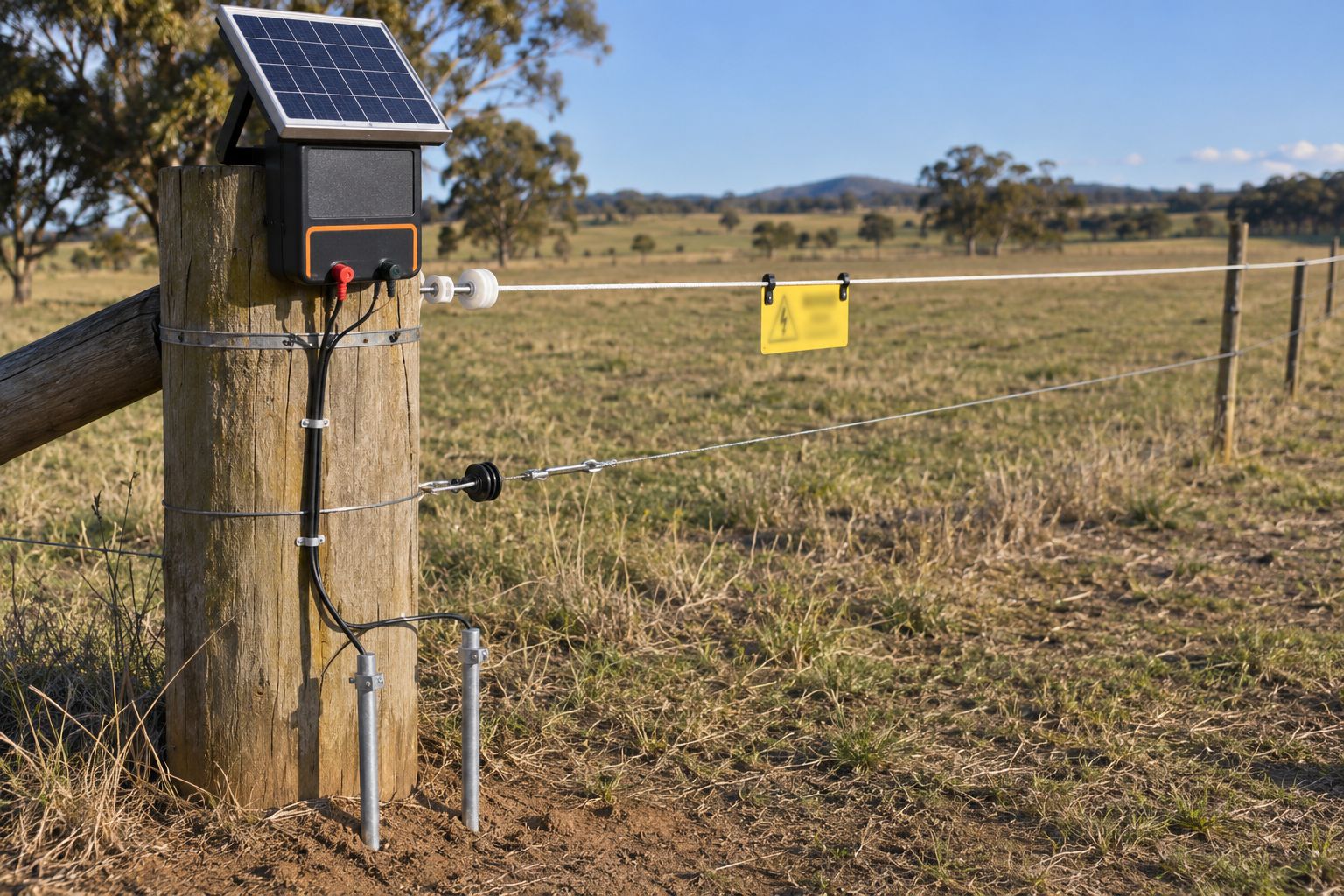
Dry ground is the earthing problem here
An electric fence needs moist soil around its earth stakes to work at full strength. Tamworth averages 659 mm of rain a year and its January mean maximum is above 33 degrees at the Bureau of Meteorology's airport station (Bureau of Meteorology), so for much of summer the topsoil is dry. A fence that tests well in a wet spring can be weak in February.
Ask how the earth is designed for dry conditions: more stakes, deeper stakes, a site that stays damper, or an earth return wire run on the fence itself so stock touch a live and an earth wire together. Contractors who have worked this country will have an answer.
Flood flats and creek crossings
Victorian Government guidance for riparian fences in flood-prone areas, an interstate source, says electric fences are often the best choice on flood-prone ground because fewer wires catch less debris, and it recommends cut-out switches so an electrified crossing can be isolated when water is up (Victorian riparian fencing guidance). It also says they need reliable power and regular checks. Along the Peel, Namoi and Mooki that trade-off is often worth it.
Powerlines
Many fence lines here share a road frontage with a powerline. The regional electricity network operator says to stay at least 8 m away from a powerline and anything touching it (network operator safety guidance). Ask the contractor who checks for powerlines and buried services before posts go in, and get advice before running a hot wire directly under and alongside a powerline.
Get it scoped
Tell the contractor what the fence is for, the length, where the nearest mains power is and whether the line floods. Use the quote form. For a new permanent fence instead of an offset, read cattle and sheep fencing.
What an electric fence cannot do
It cannot hold stock that have not learned to respect it, and it stops working the moment the power fails, the earth dries out or a wire shorts on grass or a fallen branch. It is a risky choice on its own along a busy road. This page cannot size an energiser for your fence or say which edition of the standard applies. The contractor and the manufacturer's instructions do that.
Check the current rules before you rely on this
This page describes how electric fencing is used on farms around Tamworth and what public sources say about dry-ground earthing, flood crossings, wild dog control and powerline clearances. It describes the rules in general terms as they stood in November 2026. Standards, forms, thresholds and fines change.
The authoritative sources are Local Land Services, 1080 aerial and ground baiting program for wild dog and fox control (2026 notice), Bureau of Meteorology, Tamworth Airport AWS climate statistics (station 055325), Victorian Government, guidelines for riparian fencing in flood-prone areas (2015; Victorian guidance, interstate), Electricity network operator, electricity and agriculture safety guide (PDF) and NSW Planning, fences (exempt and complying development). Where anything here differs from those sources, they are right and we are not.
We are not fencing contractors, builders, regulators or lawyers. For what applies to your fence, ask the contractor which licence or registration they hold for your job, then ask NSW Fair Trading or Building Commission NSW if you are unsure, and ask the council that covers the land.
Accurate at the time of writing, November 2026. Always check the source before relying on it.