The neighbour comes before the post driver
A farm boundary fence is half a building job and half a deal with the owner next door, and the deal has to come first. Around Tamworth the neighbour might run cattle like you, crop the black soil, keep horses on ten acres, or be a forest, a stock reserve or a road. Each of them has a different idea of what a proper fence looks like.
Contractors will build whatever two owners agree on. They will not referee. The order below is the one that keeps boundary jobs moving.
Five steps
| Step | Do this | Because |
|---|---|---|
| Find the line | Look for pegs and old strainers, check the title plan, and use a registered surveyor if there is any doubt. | Old fences follow creeks and ridges, not boundaries. |
| Talk | Agree the fence type, who gets quotes and how the cost splits. | Cost is shared for agreed or ordered work, not for a surprise. |
| Quote | One written quote addressed to both owners, extras priced separately. | Whoever wants more than a sufficient fence pays for it. |
| Sign | A short note both owners sign or an email both reply to. | Agreements do not pass to a later owner, and memories fade. |
| Build | Set dates, move stock on both sides, pull the old fence. | Both sides need their cattle held while the fence is down. |
Under the Dividing Fences Act 1991, in the version we found, adjoining owners are usually liable to share the cost of a sufficient dividing fence equally, and the Act sets no height or wire count for "sufficient" (the Act, version dated 7 December 2024). If talking gets nowhere, the dividing fences guide sets out the notice process.
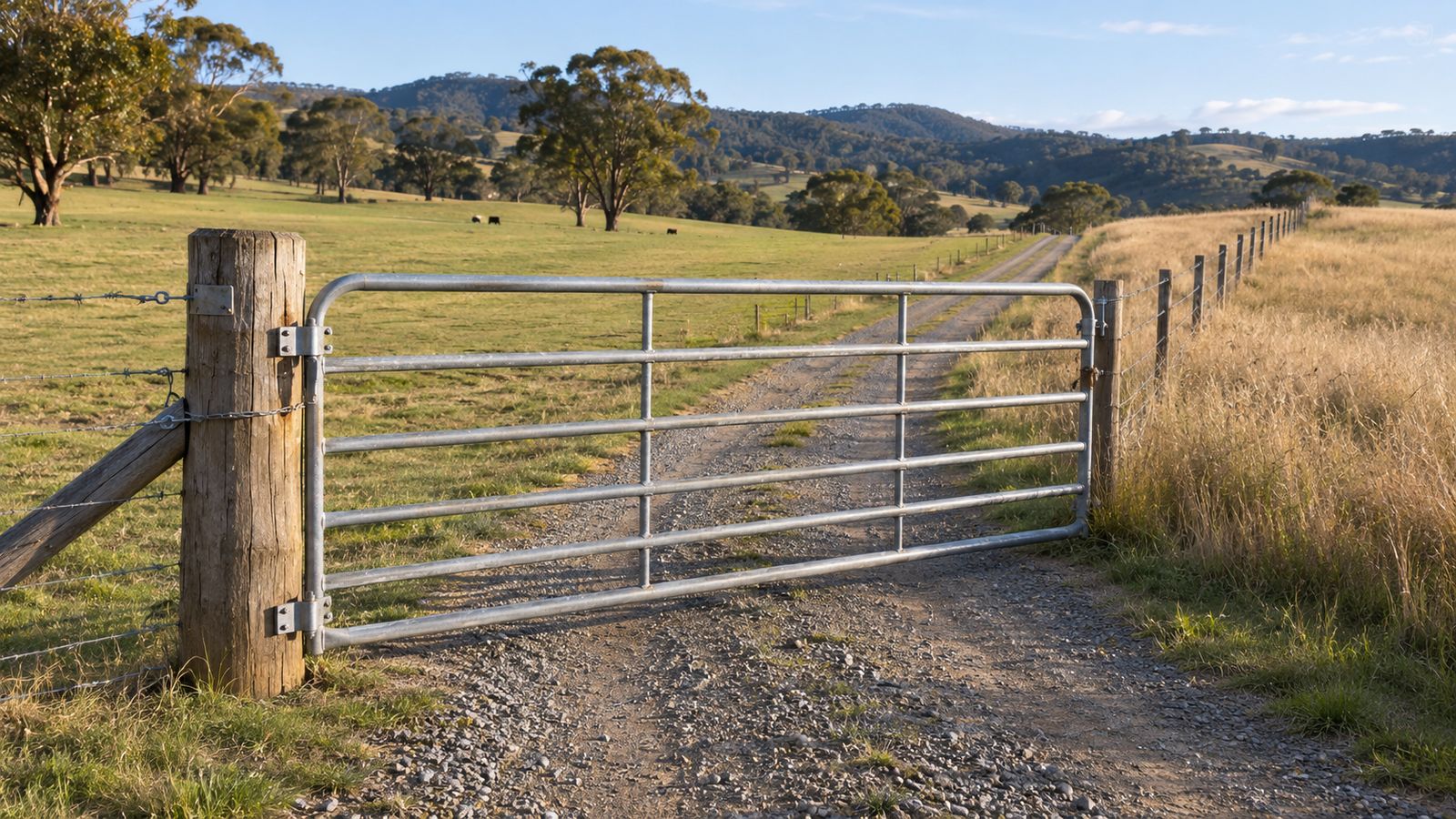
Cattle on one side, crop on the other
On the plains west and south of Tamworth, a common boundary has a grazier on one side and a cropper on the other. The cropper may want nothing more than a fence that keeps cattle out of the wheat. The grazier may want a fence that holds weaners. Both views are reasonable, and neither owner can simply impose theirs.
The usual answer is to agree on a base fence both would accept and let whichever owner wants more pay for the extra: a hot wire on the cattle side, or extra barbs. Ask the contractor to show the base fence and each extra as separate lines so the split is clear.
Lifestyle blocks next door
The ring of small blocks around Tamworth, out through Kootingal, Moonbi, Calala and Nemingha, brings graziers new kinds of neighbours. Someone who has never shared a fence may not know the rules, may not want barbed wire because of a horse, and may be paying for a fence for the first time. Being clear and patient early avoids a formal notice later.
Roads, reserves and forests
Along a public road there is no neighbour to share with, and NSW Police say owners are responsible for keeping their stock off public roads (NSW Police). Along a travelling stock reserve or state forest, who pays is not settled by any source we read. The roads and reserves guide has what we found.
Timber on the line
Old boundaries in the hill country often run through box, ironbark or regrowth. NSW rules let landholders clear some native vegetation for rural infrastructure such as fences, within a limit that varies by zone and includes clearing on the neighbour's side (NSW Government). Check before the dozer goes in. The approvals and clearing guide explains.
Next step
When you and the neighbour agree, send the job through the quote form and say it is a boundary. A contractor can quote both of you and split the invoice if you ask before work starts.
What this page cannot do
This page cannot say where your boundary is, whether your neighbour has to contribute or what a court or tribunal would treat as a sufficient fence between your two places. It does not replace the Act, a surveyor or legal advice, and it binds nobody. Contractors build what owners agree on and are not there to settle arguments, and neither is this site.
Check the current rules before you rely on this
This page describes the usual order for replacing a shared rural boundary fence in NSW and where the public sources leave questions open. It describes the rules in general terms as they stood in November 2026. Standards, forms, thresholds and fines change.
The authoritative sources are Dividing Fences Act 1991 (NSW), in-force version dated 7 December 2024 (check the current version), Legal Aid NSW, fences, boundaries and retaining walls FAQs, NSW Police, straying stock on public roads and NSW Government, native vegetation allowable activities (rural infrastructure, fences). Where anything here differs from those sources, they are right and we are not.
We are not fencing contractors, builders, regulators or lawyers. For what applies to your fence, ask the contractor which licence or registration they hold for your job, then ask NSW Fair Trading or Building Commission NSW if you are unsure, and ask the council that covers the land.
Accurate at the time of writing, November 2026. Always check the source before relying on it.